





Norman Foster Stresses the Importance of Interdisciplinary Architecture in Creating Future Cities
Architecture, as both a profession and the built environment, currently finds itself at a crossroads in trying to adapt to a world in constant flux. Cities and its people face continuous socio-economic, political and environmental change on a daily basis, prompting a necessary rethink in the evolution of sustainable urbanization. With a focus on housing, society and cultural heritage, RIBA’s International Conference, Change in the City, aims to offer insight into the “New Urban Agenda” and how architects can play an interdisciplinary role in future urban development.
Speaking in an interview ahead of the conference, Norman Foster is a strong advocate for a careful consideration of what aspects of urban life need to be prioritized when designing cities of the future. For an increasingly global society, Foster stresses the need for architecture to surpass buildings and tackle its greatest obstacle – global warming, honing in on its roots and factors involved to create viable urban solutions.
https://www.archdaily.com/875169/norman-foster-stresses-the-importance-of-interdisciplinary-architecture-in-creating-future-citiesOsman Bari
Spotlight: Philip Johnson
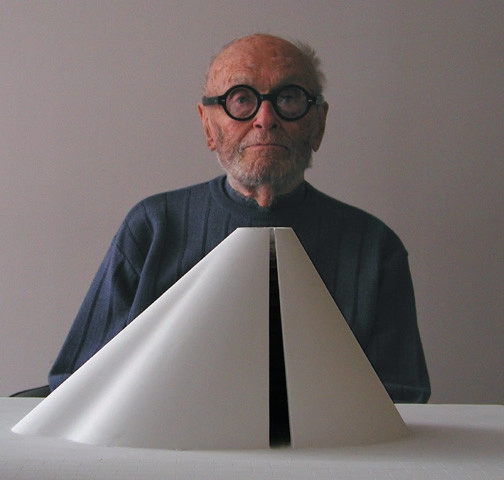
When he was awarded the first ever Pritzker Architecture Prize in 1979, the jury described Philip Johnson (July 8, 1906 – January 25, 2005) as someone who “produced consistent and significant contributions to humanity and the environment," adding that "as a critic and historian, he championed the cause of modern architecture and then went on to design some of his greatest buildings.” However, even after winning the Pritzker Prize at age 73, Johnson still had so much more of his legacy to build: in the years after 1979, Johnson almost completely redefined his style, adding another chapter to his influence over the architecture world.



https://www.archdaily.com/398631/happy-107th-birthday-philip-johnsonRory Stott


RIBA Releases Statement Addressing Grenfell Fire Tragedy
.jpg?1499302315&format=webp&width=640&height=580)
The Royal Institute of British Architects (RIBA) has released an official statement on design for fire safety following the tragic Grenfell Tower fire on June 14. The causes and aftermath of the catastrophic fire, which ravaged 27 storeys of the council estate in the London borough of North Kensington are currently under investigation, with a team of 250+ working on operations including recovering and identifying victims (the death toll has risen to 80+) according to recent reports from the BBC and the Met Police. The aluminium-composite cladding Reynobond PE - identified as one of the main reasons for the fire’s spread up the building’s façade has sparked outrage over failed safety regulations and debate over the lack of responsibility behind the building’s (and many others) construction overall. Further fire safety tests revealed the cladding to be present in up to 60 similar council estates with more being urged to submit samples for testing.
For a quick summary, we’ve covered some key points from each of the 3 sections addressed RIBA's statement below:
https://www.archdaily.com/875234/riba-releases-statement-addressing-grenfell-fire-tragedySabrina Syed
This Video Presents an Abstract Reflection on Our Modern Cities of Glass
In this visual essay, Greek filmmaker Yiannis Biliris documents the all-pervasive pall of glass that covers the modern city. The three-and-a-half-minute-long film, produced by Visual Suspect and shot entirely in Hong Kong, captures the vivid reflections seen in the facades of the city’s buildings, as Biliris selectively pans and zooms his camera to instill a strong sense of urgency in the viewer’s mind.
The essay, beautifully haunting in its imagery, might be seen as a reflective commentary on the state of our built environment today. Inspired by Albert Einstein’s general theory of relativity, which states that mass causes a distortion in space and time, it seems to subtly ask if our understanding of reality is warped itself. Describing the video as "a visual essay about perception and knowledge as [a] reflection of our reality," Biliris comments that "mass curves space and time, while the observer has his own perspective."
https://www.archdaily.com/875055/this-video-presents-an-abstract-reflection-on-our-modern-cities-of-glassSuneet Zishan Langar
Emiel Claus / PERNEEL OSTEN ARCHITECTEN
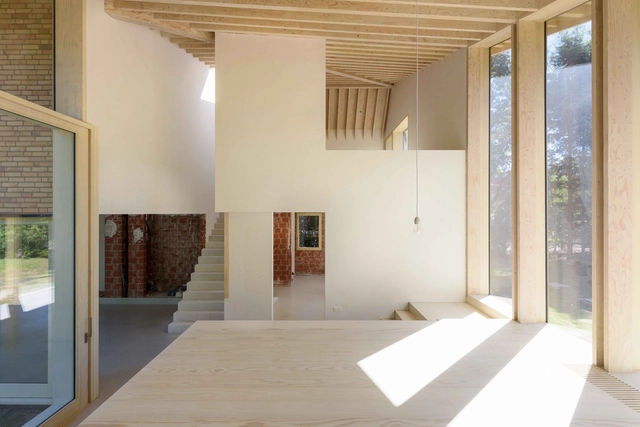




-
Architects: PERNEEL OSTEN ARCHITECTEN
- Area: 683 m²
- Year: 2016
-
Manufacturers: Metsa Woods, Shuring
-
Professionals: UTIL Struktuurstudies
https://www.archdaily.com/871786/emiel-claus-perneel-osten-architectenCristobal Rojas
9 Weird and Wonderful Architectural "Ducks"

They exist for a reason.
Coined by Robert Venturi and Denise Scott Brown in Learning from Las Vegas, “Ducks” are buildings that project their meaning in a literal way [1]. No architectural metaphors here - they are exactly what they look like. Many emerged alongside interstate highways, a lone doughnut or dinosaur punctuating the road trip across America. Places like Las Vegas and Macau have built their identity in the kitsch and literal language of architecture – with the duck a strong contributor. Though they get relegated to one of the weird forays of the postmodern era, ducks still make current-day appearances (like the Chicago Apple Store’s recent Macbook roof). Are they fun, kitschy, or just plain ugly? Love them or hate them, ducks have a light-hearted presence in our architectural history. Below are 9 weird and wonderful examples of buildings that make no apologies for being exactly what they are:


https://www.archdaily.com/875022/9-weird-and-wonderful-architectural-ducksSabrina Syed
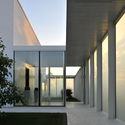
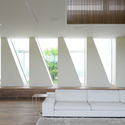
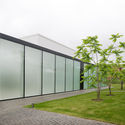
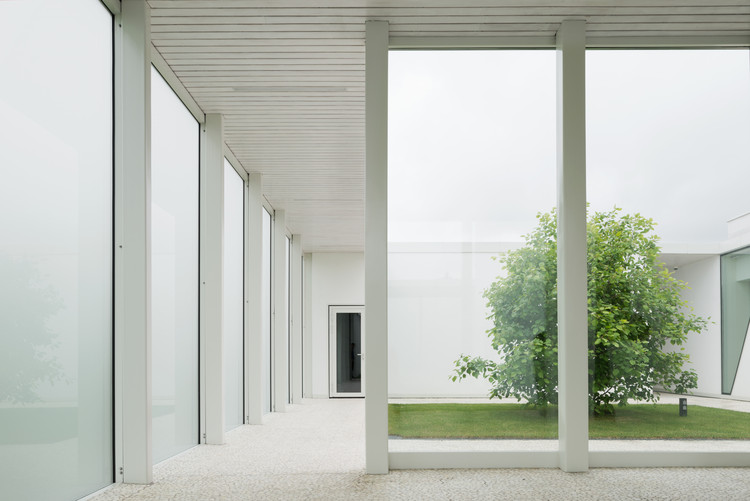
Millennium Park Village Residence / Tsimailo Lyashenko and Partners
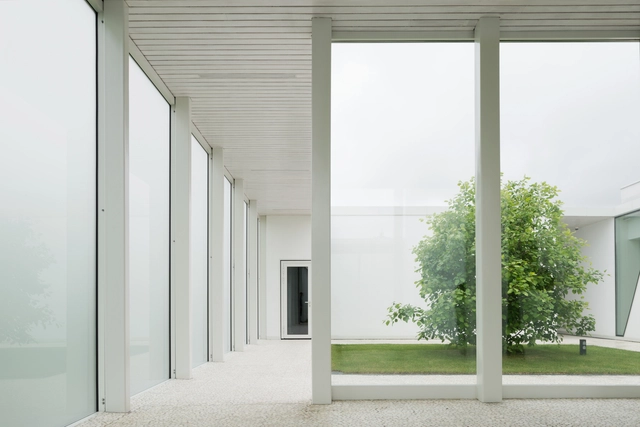
-
Architects: Tsimailo Lyashenko and Partners
- Area: 535 m²
- Year: 2016
-
Manufacturers: Valcucine, Decoflame, Minotti, Schüco
-
Professionals: SK Arsolit
https://www.archdaily.com/873101/millennium-park-village-residence-tsimailo-lyashenko-and-partnersRayen Sagredo
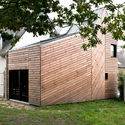
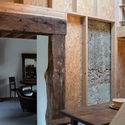
Doppelgänger / KARST architecture



-
Architects: KARST architecture
- Area: 40 m²
- Year: 2016
-
Manufacturers: SIGA, Steico, Swiss Krono AG
https://www.archdaily.com/871210/doppelganger-karst-architectureAntonia Cayupe
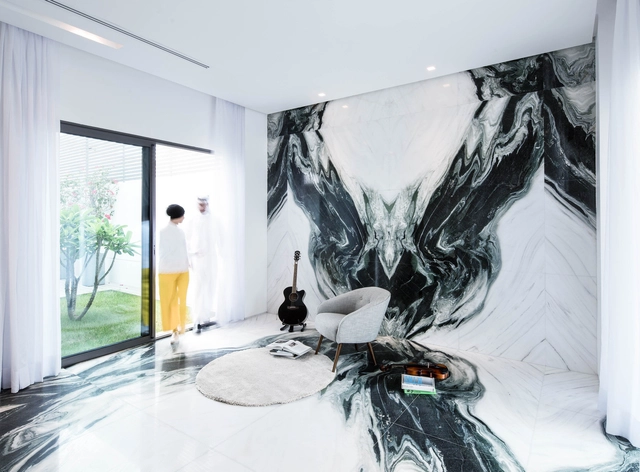
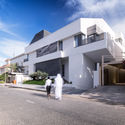
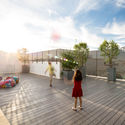
A House in Yarmouk / Studio Toggle



https://www.archdaily.com/874223/a-house-in-yarmouk-studio-toggleRayen Sagredo
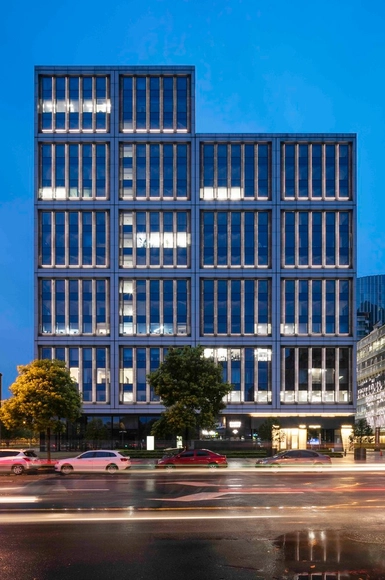
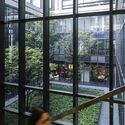
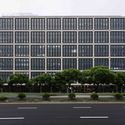
Zancheng Center / gmp Architekten



https://www.archdaily.com/875214/zancheng-center-gmp-architektenCristobal Rojas
OASIS Veterinary / Betwin Space Design
.jpg?1498446549)
.jpg?1498446792 "© Yong-joon Choi")
.jpg?1498447103 "© Yong-joon Choi")
.jpg?1498447442 "© Yong-joon Choi")
.jpg?1498446850 "© Yong-joon Choi")
.jpg?1498446549)
-
Interior Designers: Betwin Space Design
- Area: 363 m²
- Year: 2017
-
Manufacturers: CM&G, Medi Plan
-
Professionals: YNL Design, Betwin Space Design
https://www.archdaily.com/874411/oasis-veterinary-betwin-space-designDaniel Tapia
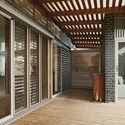
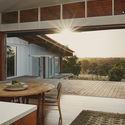
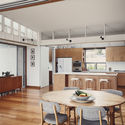
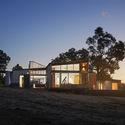
Mindalong House / Paul Wakelam Architect - A Workshop


-
Architects: Paul Wakelam Architect - A Workshop
- Area: 3930 ft²
- Year: 2016
-
Manufacturers: Austim, Austral Bricks, Clearlite
https://www.archdaily.com/874218/mindalong-house-paul-wakelam-architect-a-workshopDaniel Tapia
Studio Gang's "Hive" Opens at the National Building Museum
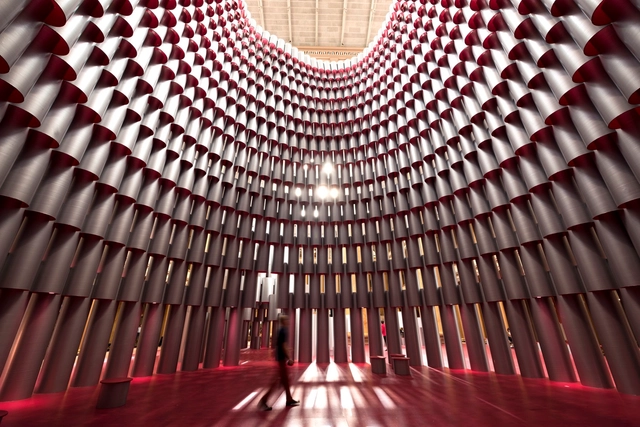
Hive, Studio Gang’s 2017 Summer Block Party installation, has opened to the public at the National Building Museum in Washington, D.C. Constructed from 2,551 silver-and-magenta wound paper tubes, Hive invites visitors to explore their senses in a series of dome-shaped chambers, each scaled to reflect a unique sound signature.
Utilizing structural paper tubes commonly used in construction as concrete formwork, Hive takes its form from the catenary physics that have inspired some of the world’s great structures such as the the Gateway Arch in St. Louis and Brunelleschi’s Dome at the Florence Cathedral in Italy, and vernacular buildings such as Musgum mud huts in Cameroon.
.jpg?1499456785 "© Tim Schenck")
.jpg?1499456766 "© Tim Schenck")
.jpg?1499456816 "© Tim Schenck")

https://www.archdaily.com/875385/studio-gangs-hive-opens-at-the-national-building-museumPatrick Lynch
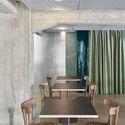
Old Scuola Rotterdam HQ / Instability We Trust




-
Architects: Instability We Trust
- Area: 350 m²
- Year: 2017
-
Manufacturers: Corradi
https://www.archdaily.com/875066/old-scuola-rotterdam-hq-instability-we-trustRayen Sagredo
Royal Academy of Arts Adds Permanent Architecture Gallery to Chipperfield Renovation Plans
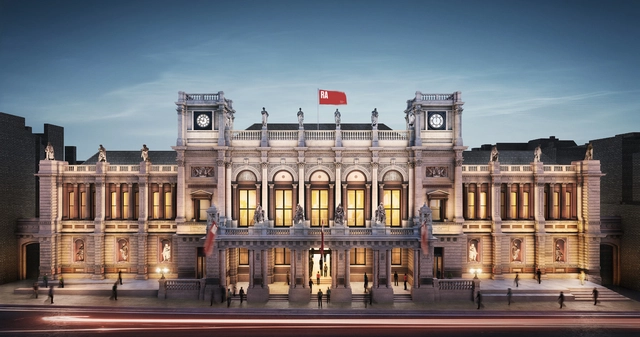
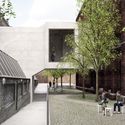
London’s Royal Academy of Arts has announced plans for a new permanent architecture-specific gallery and the creation of two new international architecture awards as part of the RA’s mission to “garner a wider appreciation and understanding of architecture, bringing to the fore its vital relationship to culture and society.”
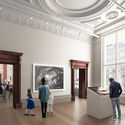
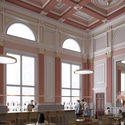
The new architecture space, along with a cafe, will be housed within the Dorfman Senate Rooms in Burlington Gardens, allowing the academy to show architectural exhibition year-round. The architecture rooms join wider renovation plans led by David Chipperfield Architects that will also include a new naturally-lit theater.


https://www.archdaily.com/875371/royal-academy-of-arts-adds-permanent-architecture-gallery-to-chipperfield-renovation-plansPatrick Lynch
T House / Teófilo Otoni Arquitetura




https://www.archdaily.com/875063/t-house-teofilo-otoni-arquiteturaRayen Sagredo