From the original Penn Station to Midway Gardens, our "lost" buildings reflect our (sometimes misguided) desire to move forward. This article, originally published on HomeAdvisor, shows how the some of the US's most recognizable streetscapes might look if history had taken a different turn.
When it comes to sustainability, the Netherlands has always been at the forefront. In recent news, Zwolle, one of the country's "greenest cities," implemented the world's first bicycle lane composed of post-consumer waste that would normally be discarded or incinerated.
To create the material, Zwolle used old, plastic bottles, festival beer cups, cosmetic packaging, and plastic furniture. Still, in the pilot phase, the bike path contains 70% recycled plastic in its 30-meter pathway. Although, the city hopes to create a bike path made entirely of recycled plastic in the future.
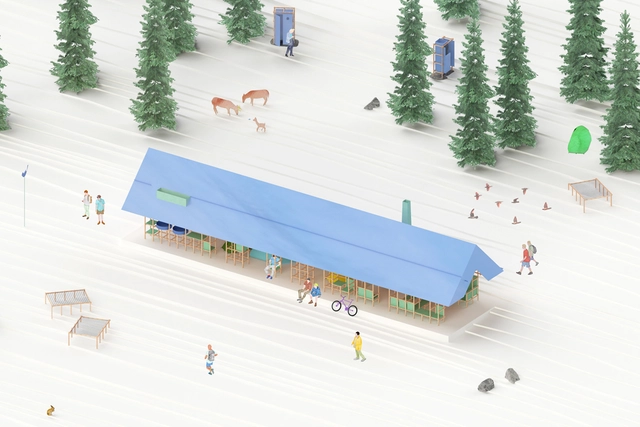
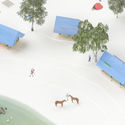
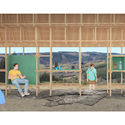
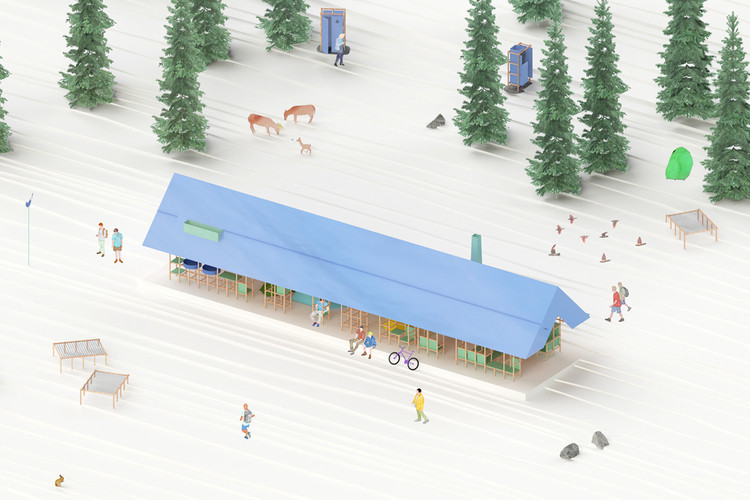
French architects USUS Architectes reinvent the typical campground by designing a modular multipurpose structure as an ecologicalbivouac along the trekking routes in Massif Central, France. Together, the Association of Natural Parks of the Massif Central (IPAMAC), PNR Livradois-Forez, PNR Millevaches in Limousin, and the International Center for Art and Landscape (CIAP) wanted to tackle the lack of suitable accommodation along the trails. After deliberating from over 64 proposals, the agencies ultimately selected Peaks + Simon BOUDVIN and USUS + Zebra3 as project co-laureates of the competition.
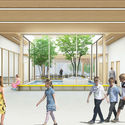
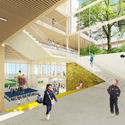
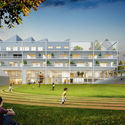
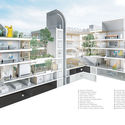
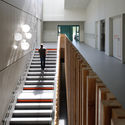
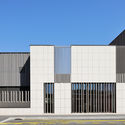
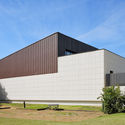
Office Ou, a Toronto-based landscape design firm, in collaboration with INOSTUDIO Architects, has designed a new public school for the historic Smíchov district of Prague. The initial competition, organized by the Centre for Central European Architecture, chose the Office Ou & INOSTUDIO design out of 66 anonymous submissions. This school would be the first new public school built in Prague's urban center in close to 100 years.
The entertainment industry frequently captures unusual architecture from theme parks that explore bygone eras to remote locales in the hills of Las Vegas that often go unseen.
A two-hour drive from Rio de Janeiro's renowned beaches you can find a 20th century French Normandy building in the state's sierra region: The Palácio Quitandinha.
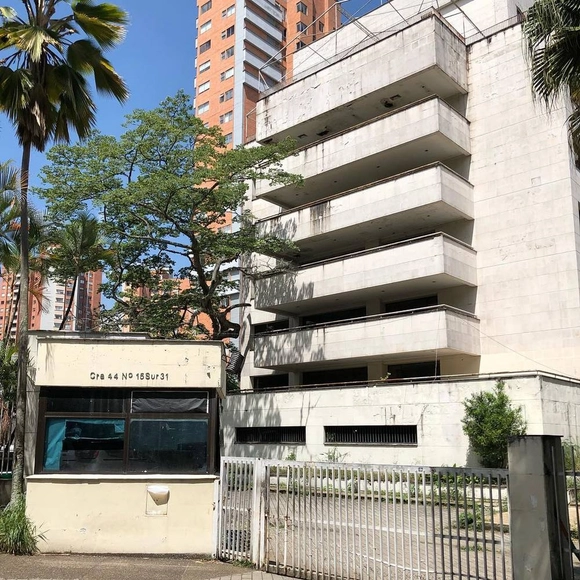
After a series of failed attempts, the Monaco building in Medellín will finally be demolished at the beginning of 2019, according to the Colombian newspaper El Tiempo.
The Monaco building, which was converted into a municipal asset this year, was the residence of the late drug trafficker Pablo Escobar in the El Poblado neighborhood of Medellín. In January of 1988, a car bomb with 80 kilograms of dynamite exploded in front of the building giving rise to a series of attacks between the drug cartels in Medellín.



.jpg?1537110386&format=webp&width=640&height=580)

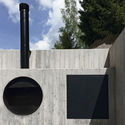


_H.jpg?1536161693 "© Marcel van der Burg")




.jpg?1536882741)
.jpg?1536882797 "© Shamanth Patil")
.jpg?1536882813 "© Shamanth Patil")
.jpg?1536882589 "© Shamanth Patil")
.jpg?1536882828 "© Shamanth Patil")
.jpg?1536882741)


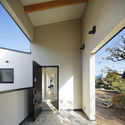
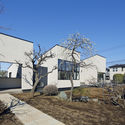
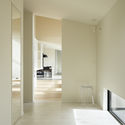

















-HDR.jpg?1537018916 "© Nguyen Thai Thach")
-HDR.jpg?1537018969 "© Nguyen Thai Thach")