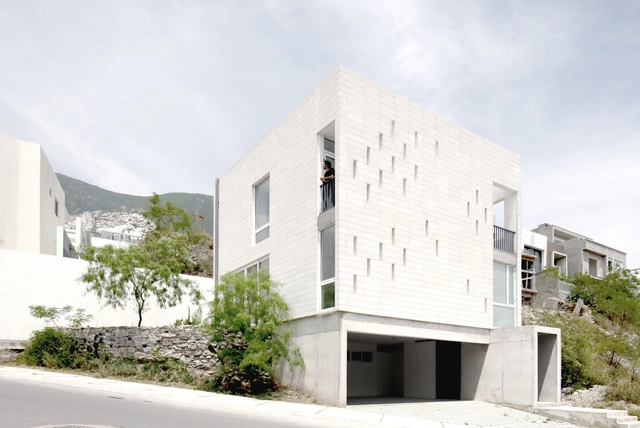
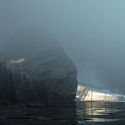
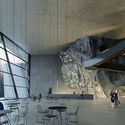
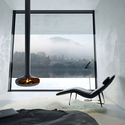
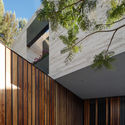
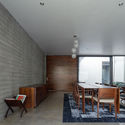
Anyone who enjoys architecture and Netflix has certainly already watched 'The World's Most Extraordinary Homes,' in which architect Piers Taylor and actress Caroline Quentin travel the world visiting homes that stand out in some way. Many times, when watching the show, architects may question and wish to carefully examine the drawings of each project, which is why we have gathered a selection of houses that appear on the show. Learn even more about the conception of each home, providing a panorama that helps understand a bit more about how residential architecture can be perceived in different places around the world.
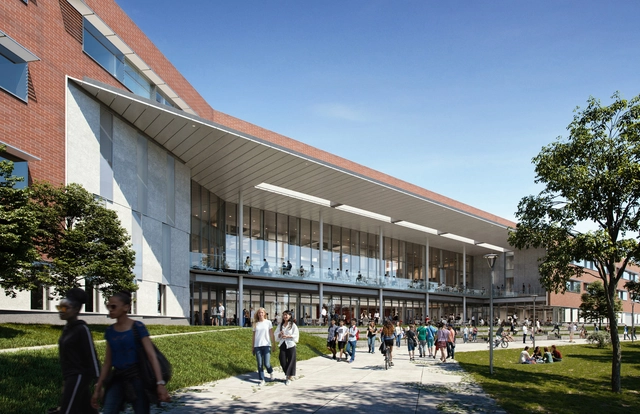
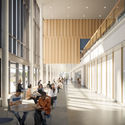
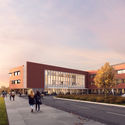
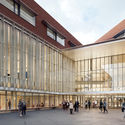
Architecture firm Perkins+Will have broken ground on a new middle and high school sited in the Belmont suburb of Boston. The 445,100 SF project is conceived as a flexible and agile environment for learning that's made to prepare students for jobs in future industries. Emphasizing hands-on learning, the project co-locates students on one campus while encouraging multi-age learning.
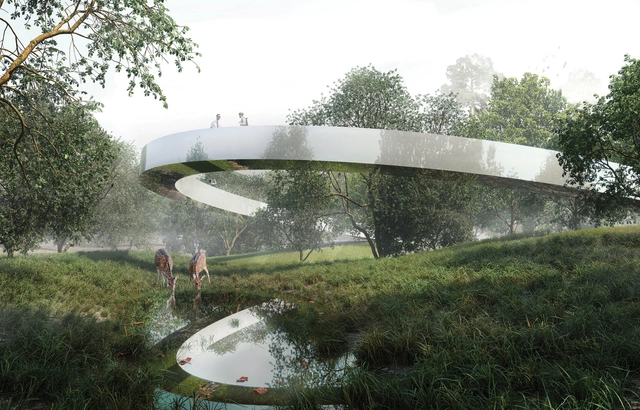
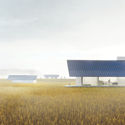
Emmi Keskisarja & Janne Teräsvirta Arkkitehtitoimisto & Company Architects have designed a futuristic green vision for an island in Finland. Titled “Emerald Envisioning for Luonnonmaa 2070,” the scheme is set on Luonnonmaa island on the Finnish West archipelago coast, close to the city of Turku. The vision for the island is one where climate change and biodiversity decline are combated through a reimagination of the urban connection with nature.
The use of steel in architecture is considered as one of the most innovative construction developments in history, allowing architects to create structures in scales they never thought they could. Fast-forward a few centuries, and steel remains as one of the most crucial materials in architecture. But there is a lot more to the material than just tensile strength and durability, some architects were well-aware of steel's potential and transformed it into lighting fixtures, facades, decorative elements, and finishes.
Here are 15 projects where architects looked beyond steel as structural support and explored its diverse possibilities in architecture.
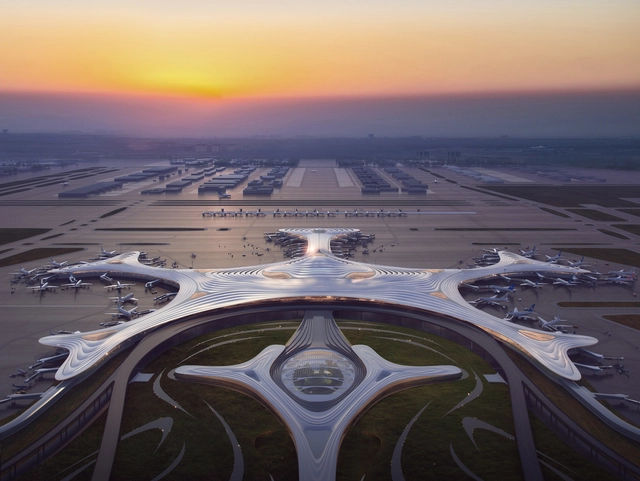
MAD Architects, led by Ma Yansong, has released details of their design for Terminal 3 at Harbin Taiping International Airport in Northern China. Referencing the gentle slopes of the surrounding landscape, and the region’s immense snow and ice, MAD’s scheme creates an architectural poetry that settles into its locale in the spirit of a snowflake falling to earth, while simultaneously expressing the surreal, interstellar space of future air travel.
Past, Present, Future is an interview project by Itinerant Office, asking acclaimed architects to share their perspectives on the constantly evolving world of architecture. Each interview is split into three video segments: Past, Present, and Future, in which interviewees discuss their thoughts and experiences of architecture through each of those lenses. The first episode of the project featured 11 architects from Italy and the Netherlands and Episode II is comprised of interviews with 13 architects from Spain, Portugal, France, and Belgium.
The goal of the series is to research these successful firms and attempt to understand their methods and approaches. By hopefully gaining a clearer picture of what it means to be an architect in the 21st century, the videos can also serve as inspiration for the next generation of up-and-coming architects and students as they enter the field.
João Luís Carrilho da Graça is a Portuguese architect, lecturer, and founder of Carrilho da Graça Arquitectos. In addition to his award-winning projects, the architect has taught at the Technical University of Lisbon, guest-lectured at the Autonomous University of Lisbon and University of Évora, and has been invited to several universities, seminars and conferences all over the world. His work mostly focuses on public projects, creating uniquely-designed spaces for the community.
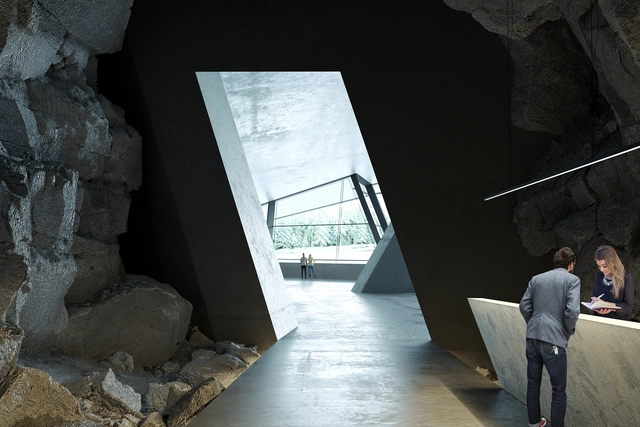
Design practice Ad Hoc Architecture has created a new proposal for a hotel inside Volsovskaya cave in rural Russia. Dubbed the Vels Hotel, the project is located on the banks of the Vishera River and adjacent to the River Wels. The hotel emerges from the cave and terraces down to the water. Intimately linked to the landscape, the design was made to be a synthesis of the Ural mountains, cultural history and modern architecture.
























.jpg?1558583488 "© Santiago Vaca Jaramillo")
.jpg?1558583140 "© Andrés Villota Pelusa")
.jpg?1558583560 "© Santiago Vaca Jaramillo")
.jpg?1558583576 "© Santiago Vaca Jaramillo")

.jpg?1558680317 "© Ket Kolektif")