Doors are part of our daily routine, opening and closing so naturally that we rarely consider how they work. That is why, when discussing innovations in their design, many might think, "If it ain't broke, don't fix it." However, just because something functions well doesn't mean it can't be improved. Doors are no exception—their components can be optimized for better performance without changing their fundamental nature. Instead of sticking to the familiar, why not open the door for enhancement? Pivot doors are a clear example. In addition to offering aesthetic versatility and nearly endless design possibilities, their opening system on a central axis allows for fluid and controlled movement, especially indoors. However, a challenge remains in their design: making them hold steady at different angles.
https://www.archdaily.com/1026629/and-yet-it-holds-a-pivot-hinge-system-that-keeps-doors-at-every-90-degrees-angleEnrique Tovar
Carnival is one of the biggest cultural expressions in Brazil. Image via Shutterstock
Rio de Janeiro, often called the "Marvelous City," is a vibrant tapestry woven from diverse cultural, historical, and social threads. Its story begins with the indigenous Tupi, Puri, Botocudo, and Maxakalí peoples who originally inhabited the region. The city's name, translating to "River of January," originates from Portuguese explorers who arrived at Guanabara Bay on January 1, 1502, mistakenly believing it to be the mouth of a river.
Inaugurated in 1991, the Maestro Francisco Paulo Russo State Theater in Araras is considered one of the city's and the region's main cultural venues. Designed by architect Oscar Niemeyer, one of the leading figures of the Modern Movement, the theater was equipped with all the necessary infrastructure to host local, national, and international cultural events between 1995 and 2005. Niemeyer left behind a legacy in which his signature free-form architectural style integrates influences from various sources while also engaging in a dialogue with the identity of a tropical country.
Maria Carlota de Macedo Soares was born in 1910 in Paris, where her father—who ran one of Rio de Janeiro’s most influential newspapers, Diário Carioca—was exiled. Raised among the elite, Lota arrived in Brazil in 1928 at the age of 18. She was often described as a controversial figure, known for her love of race cars, wearing jeans and men’s shirts, and for her discreet yet enduring relationship with the acclaimed American poet Elizabeth Bishop.
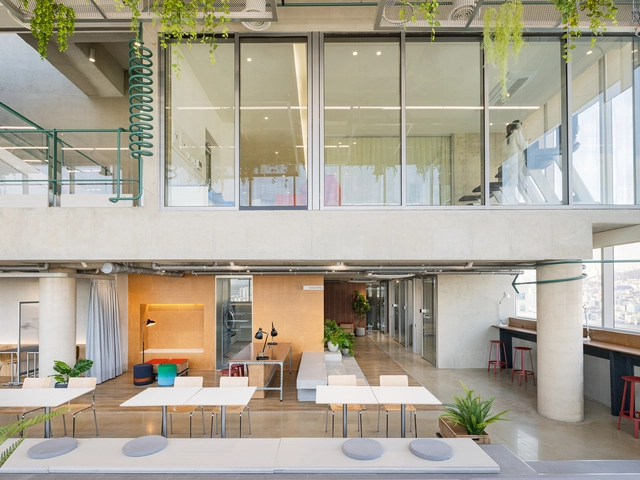
Co-living in East Asia has been rising since 2020, rapidly expanding while remaining in its early stages. At the same time, it continues to fulfill a significant demand from young professionals working in major cities. A 2020 study by real estate services firm JLL highlighted the growing demand for co-living in China and Singapore, citing key advantages such as affordability compared to private studio apartments and a contemporary urban lifestyle that fosters openness and shared experiences. Much like other industries where ownership is becoming less relevant—such as streaming services for music, films, and television, or mobility solutions like car- and bike-sharing—co-living appeals to a similar demographic that values flexibility and access over long-term commitments.
Unlike co-living initiatives in Spain, which often focus on multigenerational shared spaces, East Asian co-living primarily targets young professionals with dynamic career paths. Often required to relocate every few years, these individuals prioritize convenience and adaptability over investing in a permanent home. For them, committing to a long-term residence may not be practical, making fully furnished, professionally managed co-living spaces with built-in amenities and hygiene services an attractive option. These environments cater to fast-paced urban lifestyles, where networking at professional events often precedes solitary downtime at home.